phdream Probability in Casino Games
phdream Probability in Casino Games: Understanding Your Odds
Welcome to phdream, your premier destination for online casino entertainment in the Philippines. In the thrilling world of casino games, understanding probability is not just an academic exercise; it's a fundamental aspect of informed gameplay. Whether you're a seasoned player or new to the vibrant online casino scene, grasping the basics of probability can significantly enhance your gaming experience. This article delves into the core concepts of probability as they apply to various casino games, helping you make more strategic decisions and better appreciate the mechanics behind each spin, deal, or roll. We'll explore how mathematical odds shape your chances of winning, offering insights that can transform your approach to mobile casino gaming. Join us as we uncover the secrets of probability, empowering you to play smarter and enjoy the excitement of phdream to its fullest. Get ready to elevate your game and discover the true potential of strategic play!
Check out our exciting promotions and start playing today: Claim Your Bonus Now!
Table of Contents
- What is Probability in Casino Games?
- Understanding the House Edge
- Probability in Slot Games
- Probability in Table Games (Blackjack, Roulette, Baccarat)
- Common Misconceptions About Casino Probability
- Strategies and Tips for Applying Probability
What is Probability in Casino Games?
Probability, in the context of casino games, is the mathematical likelihood of a specific event occurring. It's expressed as a number between 0 and 1 (or 0% and 100%), where 0 means the event is impossible, and 1 means it's certain. For instance, the probability of flipping a coin and getting heads is 0.5 or 50%. In casino games, probability helps us understand the odds of winning, hitting a specific combination, or drawing a particular card. Every game offered on phdream, from the simplest slot machine to the most complex poker game, operates on a foundation of mathematical probability. This underlying structure ensures fairness and provides the casino with its long-term advantage, known as the house edge.
Understanding these probabilities is crucial for any player, especially when engaging in mobile casino gaming in the Philippines. It allows you to assess risk, compare different games, and make more informed betting decisions. While probability doesn't guarantee a win on any single play, it illuminates the long-term expected outcome of playing a particular game. For example, knowing the probability of certain card combinations in blackjack can guide your decision to hit or stand, while understanding the odds in roulette can influence your choice of bets.
Understanding the House Edge
The house edge is perhaps the most critical concept related to probability in casino games. It represents the casino's built-in advantage over the player, expressed as a percentage of the player's initial bet. This percentage is the average profit the casino expects to make from each wager over the long term. For example, if a game has a 2% house edge, the casino expects to keep 2 cents for every dollar wagered by players. This doesn't mean you'll lose 2% of every bet; rather, it's an average over millions of plays.
Every game at phdream has a house edge, ensuring the casino's profitability. This edge is meticulously calculated by mathematicians and statisticians to reflect the game's rules and payout structure. For instance, in American Roulette, the presence of both a '0' and a '00' pocket gives the house a higher edge compared to European Roulette, which only has a single '0'. Recognizing the house edge for different games is vital for strategic play. Games with a lower house edge generally offer better long-term returns to the player, making them more favorable choices for those looking to maximize their playing time and potential winnings.
Explore games with favorable odds at phdream Casino!
Probability in Slot Games
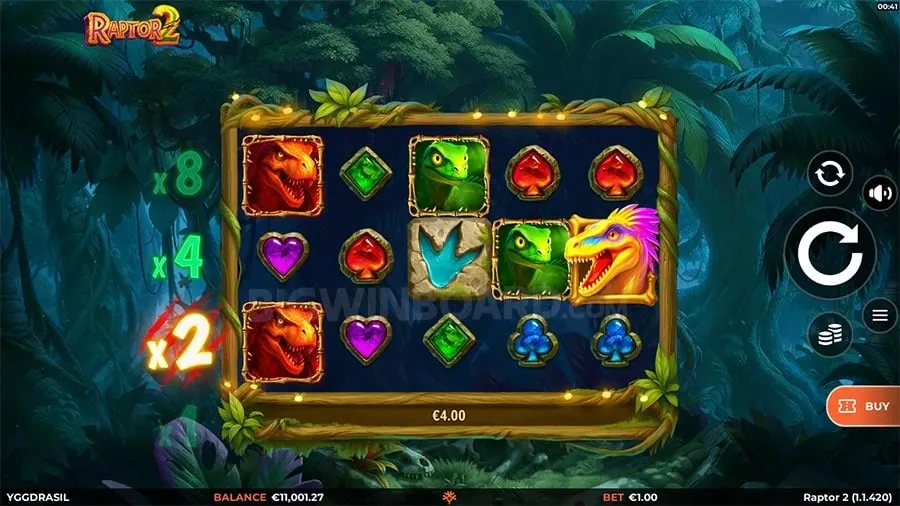
Slot games are immensely popular, both in traditional casinos and on mobile platforms like phdream. While they often seem purely based on luck, probability plays a crucial role in their design and operation. The core concept governing slot machine probability is the Random Number Generator (RNG). An RNG is a sophisticated algorithm that constantly generates sequences of random numbers, determining the outcome of each spin. This means that every spin is an independent event, and past results have no bearing on future outcomes.
Key terms related to slot probability include:
- Return to Player (RTP): This is the theoretical percentage of all wagered money that a slot machine will pay back to players over time. An RTP of 96% means that, on average, for every $100 wagered, the machine will pay back $96. Higher RTP percentages are generally more favorable for players.
- Volatility (or Variance): This describes the risk level associated with a particular slot game. High volatility slots pay out less frequently but offer larger wins, while low volatility slots pay out more often but with smaller amounts.
- Hit Frequency: This refers to how often a slot machine will stop on a winning combination. It's distinct from RTP, as a game can have a high hit frequency but still pay out small amounts, resulting in a lower RTP.
Understanding these elements helps players on phdream choose slots that align with their playing style and risk tolerance. While you can't predict the outcome of any single spin, knowing the RTP and volatility allows for more informed game selection within the vast array of slot games available on our mobile website in the Philippines.
Probability in Table Games (Blackjack, Roulette, Baccarat)
Table games offer a different dimension of probability, often incorporating strategic decision-making alongside pure chance. Let's explore how probability manifests in some of the most popular table games available on phdream:
Blackjack